


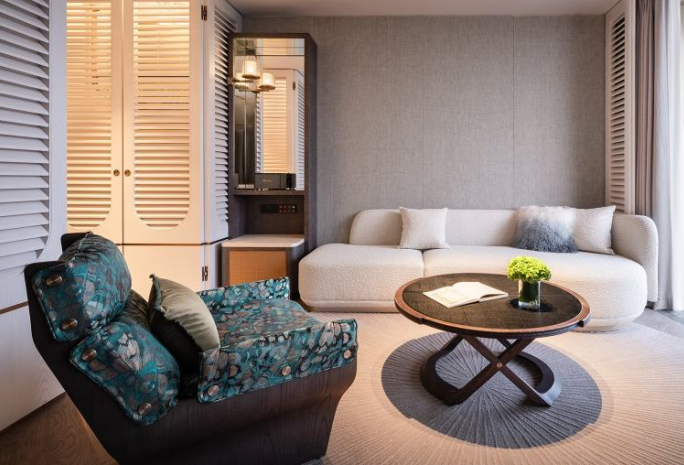
Hotel renovation furniture is sourced under a constraint that new-build projects never face: the building is open, guests are in the rooms, and revenue is flowing while the work happens. Get the furniture plan wrong and you close floors, move guests, and lose bookings; get it right and a full refresh lands floor by floor with guests barely noticing. After more than 25 years supplying loose and fixed furniture to operating five-star properties, we have learned that renovation sourcing is a logistics problem first and a design problem second.
What makes hotel renovation furniture different from new build
On a new build, furniture arrives into an empty shell on a single critical path. On a renovation, hotel renovation furniture must arrive in phased batches that match the operator's room-block schedule, often through service elevators shared with guests, and into spaces that cannot be stripped until the replacement is in the truck. The furniture itself is usually the same spec as new build — casegoods, soft seating, headboards, millwork — but the delivery rhythm is what separates a smooth refresh from a chaotic one.
There is also the question of matching. A partial renovation still has to sit next to furniture that stays. Hotel renovation furniture that quietly shifts in tone, dimension, or hardware from the existing pieces reads as a mistake to the guest, even when each new piece is individually fine. Specifying to the existing brand standard — not just to the new catalog — is the discipline that keeps a phased refresh looking intentional.
Plan the furniture around the room-block schedule
The first step is to agree the room-block sequence with the operator before a single piece is ordered. Furniture should arrive no earlier than the block it serves and no later than the night before installation. Build a production and shipping plan that books capacity in writing against those blocks, and confirm the manufacturer can stage crates so each delivery matches the next block rather than arriving all at once and crowding the loading dock.
- Phase one: public areas and a pilot room block, to prove the build and the install rhythm.
- Phase two: guestroom casegoods and soft seating, sequenced by floor or wing.
- Phase three: millwork and fixed elements that touch operational systems.
Protect the guest experience during delivery
Renovation furniture that arrives in guest-facing corridors during peak check-in is a reputation risk. Coordinate receiving windows with the front office, use protected cartons that survive a shared service route, and schedule installation inside the operator's defined quiet hours. A manufacturer experienced in occupied-property work plans for this by default; one used to greenfield jobs often does not, and the gap shows up as scuffed walls and guest complaints.
Hotel renovation furniture also benefits from a prototype room even more than new build does — because the prototype proves not only the piece but the install method in a live environment. We recommend installing one fully furnished room block first, walking it with the operator, and only then releasing the remaining volume.
Choose a manufacturer who has worked occupied properties
The supplier's track record matters more on a renovation than almost any other project type. Look for a hotel furniture manufacturer with documented delivery into operating hotels, in-house casegood and soft-seating capability, and the project discipline to stage shipments against a room-block plan. OC International has delivered coordinated furniture packages into live five-star properties across the Americas, the Middle East, and Asia, manufacturing loose and fixed furniture since 1997 with one accountable team from prototype through installation.
Review the scopes most often refreshed first: hotel guestroom furniture sets, loose furniture sets, and hotel public area furniture sets show where a phased refresh typically begins.
Storage and staging during a live refresh
An occupied property has no empty warehouse to hold furniture. Hotel renovation furniture has to be staged in the spaces the operator can spare — a ballroom during low season, a back-of-house area, a leased off-site lockup — and moved into rooms only as each block is ready. The staging plan is therefore part of the furniture plan, not an afterthought. A manufacturer experienced in live properties builds the delivery rhythm around the operator's available space, not just the production calendar.
Protected cartons matter more here than on a greenfield job, because furniture may sit staged for weeks rather than days. Wrapped properly, a piece survives both the ocean and a month in a temporary holding room; wrapped to a domestic standard, it arrives at the room already scuffed.
Coordinate with the operator's sales calendar
A renovation that closes the wrong rooms during a peak weekend is a revenue problem, not just a logistics one. The room-block sequence should be agreed with the operator's sales and revenue team, not just the project manager, so the lowest-demand blocks are refreshed first and high-demand dates are protected. Hotel renovation furniture delivered against that calendar keeps the property open and earning while the work proceeds floor by floor.
OC International plans renovation deliveries this way for operating five-star properties, staging cartons to the room-block sequence and installing inside defined quiet hours so guests and revenue are both protected.
Communicating the refresh to guests
A renovation that is invisible to the guest is the ideal, but some visibility is unavoidable — and a little communication turns disruption into reassurance. Pre-arrival notes, in-room cards during the active blocks, and a clear front-desk script keep guests informed without alarming them. Hotel renovation furniture that arrives and installs inside defined quiet hours, with cartons routed away from guest corridors, supports that communication rather than undermining it.
The properties that handle renovation best treat the guest as a stakeholder in the schedule, not an obstacle to route around. The operator's rooms team, front office, and the furniture supplier should share one sequence, so that when a guest asks what is happening on their floor, the answer is consistent and calm. A coordinated refresh protects the brand experience as carefully as it protects the build. The guest who barely notices the work being done is the truest measure of a well-run renovation, and that outcome is designed, not accidental.
Frequently asked questions
Can renovation furniture match what is already in the rooms?
Yes, when the spec is written to the existing brand standard rather than to a new catalog. Share the incumbent pieces or their reference so the new build aligns in tone, dimension, and hardware.
How do we avoid disrupting guests during delivery?
Stage shipments to the room-block schedule, agree receiving windows with the front office, and install inside defined quiet hours using protected cartons.
Is a prototype room worth it on a renovation?
It is more valuable than on new build, because it proves both the piece and the live-environment install method before the full volume is released.
Where do we store furniture during a phased renovation?
In operator-approved spaces — seasonal public areas, back-of-house, or a short-term off-site lockup — staged to the room-block sequence so pieces move into rooms only as each block is ready.
How do we protect revenue during the refresh?
By sequencing the lowest-demand room blocks first and protecting peak dates, agreed with the sales team rather than decided by the build schedule alone.
Can we renovate during peak season?
Yes, but it costs more in coordination. The sequence must protect the highest-demand dates, and the staging space gets tighter. Many operators choose shoulder seasons for the heaviest blocks and limit work to back-of-house during peaks.
In short, hotel renovation furniture succeeds when the furniture plan follows the operating schedule rather than fighting it. Phase the scope, protect the guest route, prototype one block, and choose a manufacturer who has actually delivered into live properties — and the refresh lands without the front desk ever feeling the strain.
Why global hospitality teams work with OC International
OC International (OCI) has manufactured loose and fixed furniture for five-star hotels, resorts, and serviced residences since 1997. From our manufacturing base in Dongguan we support owners, developers, design firms, and FF&E consultants across the Americas, the Middle East, and Asia with one accountable team covering design development, production, quality control, packing, shipping, and on-site installation.
What our manufacturing base delivers
- In-house casegoods, soft seating, millwork and joinery under one roof — one specification, one documented quality system, one point of accountability.
- Builds engineered to the fire-safety and emissions standards your market requires — CAL 117, CAL 133, TB 133, EN 1021, BS 5852, FSC timber, and CARB P2 — under an ISO 9001-controlled production process.
- Prototype-to-volume discipline: a signed guestroom mock-up is the reference standard every production order is measured against.
- Coordinated logistics and installation that keep multi-room-type properties on a defined delivery sequence and a protected opening date.
Selected delivered projects
Our furniture has been delivered to landmark properties including the Fairmont Austin, Four Seasons Chicago, Sheraton Dhaka, Marriott Sydney, Conrad Los Angeles, and Hilton DoubleTree projects across multiple regions — each specified to the operator's brand standard and installed to opening.
Ready to plan a furniture refresh that keeps your property open?
Plan your phased renovation furniture Request a renovation timelineYour email address will not be published. Required fields are marked *